War does not end when treaties are signed. It lingers in stories told at dinner tables, in silences that stretch across decades, in rituals of remembrance, and in the quiet shaping of identity. Memory becomes inheritance. Trauma becomes architecture. Nations move forward, but families often carry the past within them.
In Koan, Volume 1 by Lucio Pascua, war memory is not confined to textbooks or political rhetoric. It is personal, embodied, and generational. References to historical events such as Pearl Harbor and Hiroshima are not presented as distant milestones. They are living fractures within cultural consciousness. The narrative recognizes that global conflict leaves imprints not only on borders and economies, but on the psychology of those born long after the bombs have fallen.
Generational trauma operates subtly. It can manifest as heightened vigilance, deep loyalty to national identity, or unspoken grief. Children inherit emotional climates shaped by experiences they did not directly endure. A parent who survived instability may emphasize discipline. A grandparent shaped by scarcity may instill fear of vulnerability. In this way, war becomes a silent participant in family systems.
Lucio Pascua situates these themes within a broader geopolitical landscape. Koan, unfolds in a world of intelligence agencies, defense simulations, and technological escalation. The novel suggests that contemporary systems of surveillance and strategic dominance are not detached from historical wounds. They are, in part, responses to them. Nations that have experienced devastation seek security through information, prediction, and control.
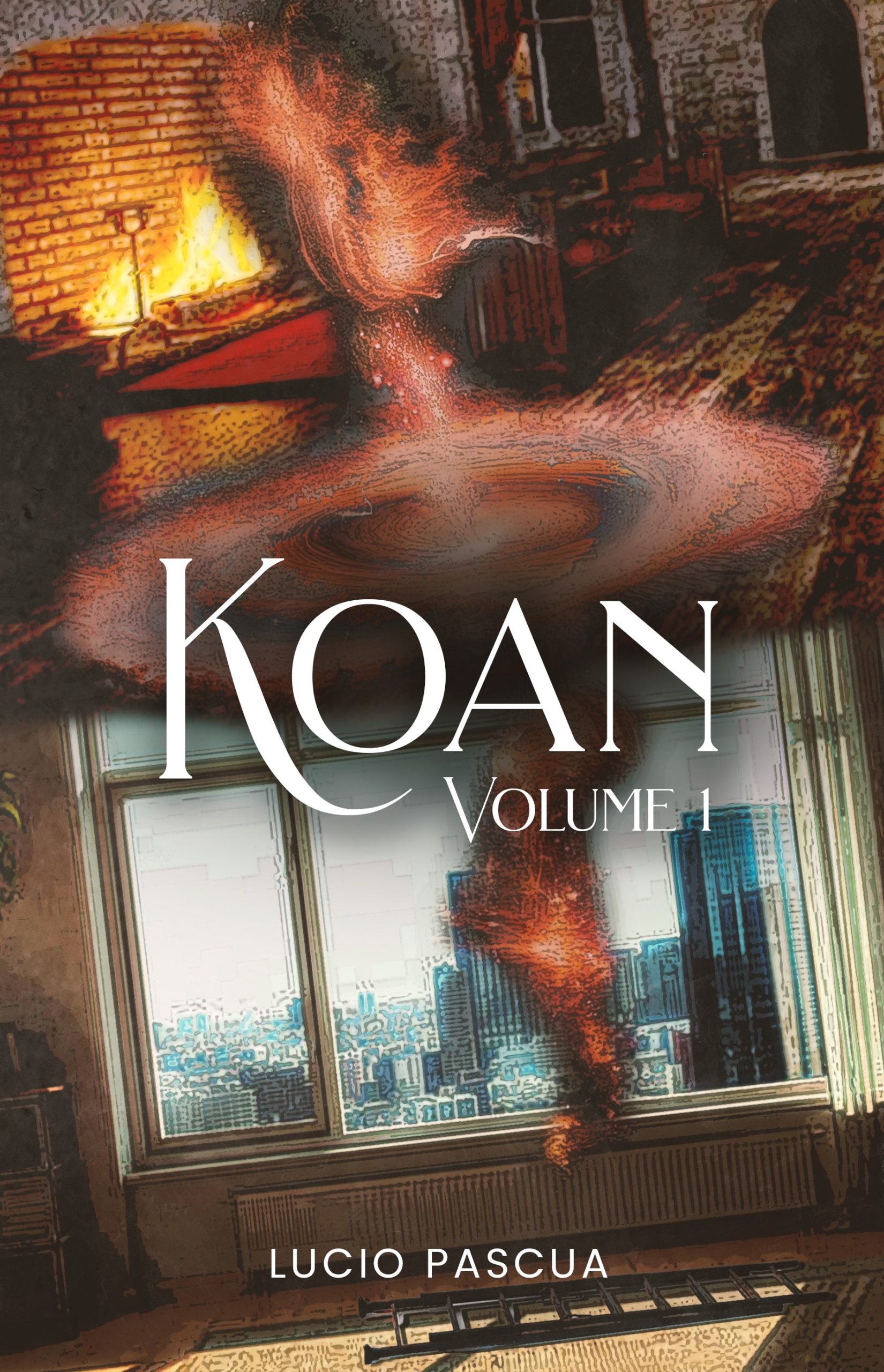
This interplay between memory and power is central to understanding generational trauma in a global context. When societies internalize catastrophe, they often recalibrate their priorities around prevention. The result can be innovation, but it can also be paranoia. The desire to ensure that history does not repeat itself may generate new forms of tension.
Within the novel, characters navigate this inherited landscape. Their decisions are shaped by cultural memory and historical allegiance. War is not an abstract concept. It informs worldview, loyalty, and ethical calculation. The past becomes a lens through which present threats are interpreted.
Generational trauma also complicates identity. Individuals born decades after major conflicts may still feel the emotional residue of those events. They may struggle with belonging, with reconciling pride in heritage with awareness of historical suffering. The memory of destruction can coexist with narratives of resilience. This duality often defines national consciousness.
Koan, reflects this complexity by weaving personal discipline and intellectual ambition into a tapestry of global tension. The characters operate in a world that remembers. Defense infrastructures are not neutral technologies. They are artifacts of collective fear. Intelligence networks are not merely strategic tools. They are manifestations of historical lessons learned at immense human cost.
In examining war memory, Pascua does not isolate trauma within a single culture. Instead, he places it within a global dialogue. The legacies of World War II reverberate across continents. Alliances, rivalries, and technological competition are informed by shared and contested histories. Trauma becomes international.
The novel invites readers to consider how memory influences policy and how policy, in turn, shapes future memory. The cycle is ongoing. Nations teach their histories selectively. They commemorate sacrifice. They mourn loss. They also reinterpret events to serve evolving narratives of identity.
War memory, therefore, is both personal and political. It lives in families and in institutions. It influences how threats are perceived and how power is exercised. In Koan,, generational trauma is not reduced to nostalgia or lamentation. It is presented as a force that continues to shape innovation, discipline, and strategic thinking.
Understanding this global context is essential. Trauma unexamined can perpetuate cycles of fear. Trauma acknowledged can inform wisdom. By situating its characters within the long shadow of historical conflict, Koan, underscores a crucial truth. The past is never fully past. It informs the present and quietly negotiates the future.
Get your copy of KOAN from Amazon:
Koan: Volume l (The Koan Saga Book 1): https://www.amazon.com/dp/1968615466
Koan: Volume ll (The Koan Saga Book 2): https://www.amazon.com/dp/1968615474